Project
Futsalaki
Matchmaking and pitch booking for futsal in Cyprus. From “anyone free on Thursday?” to a confirmed, paid game.
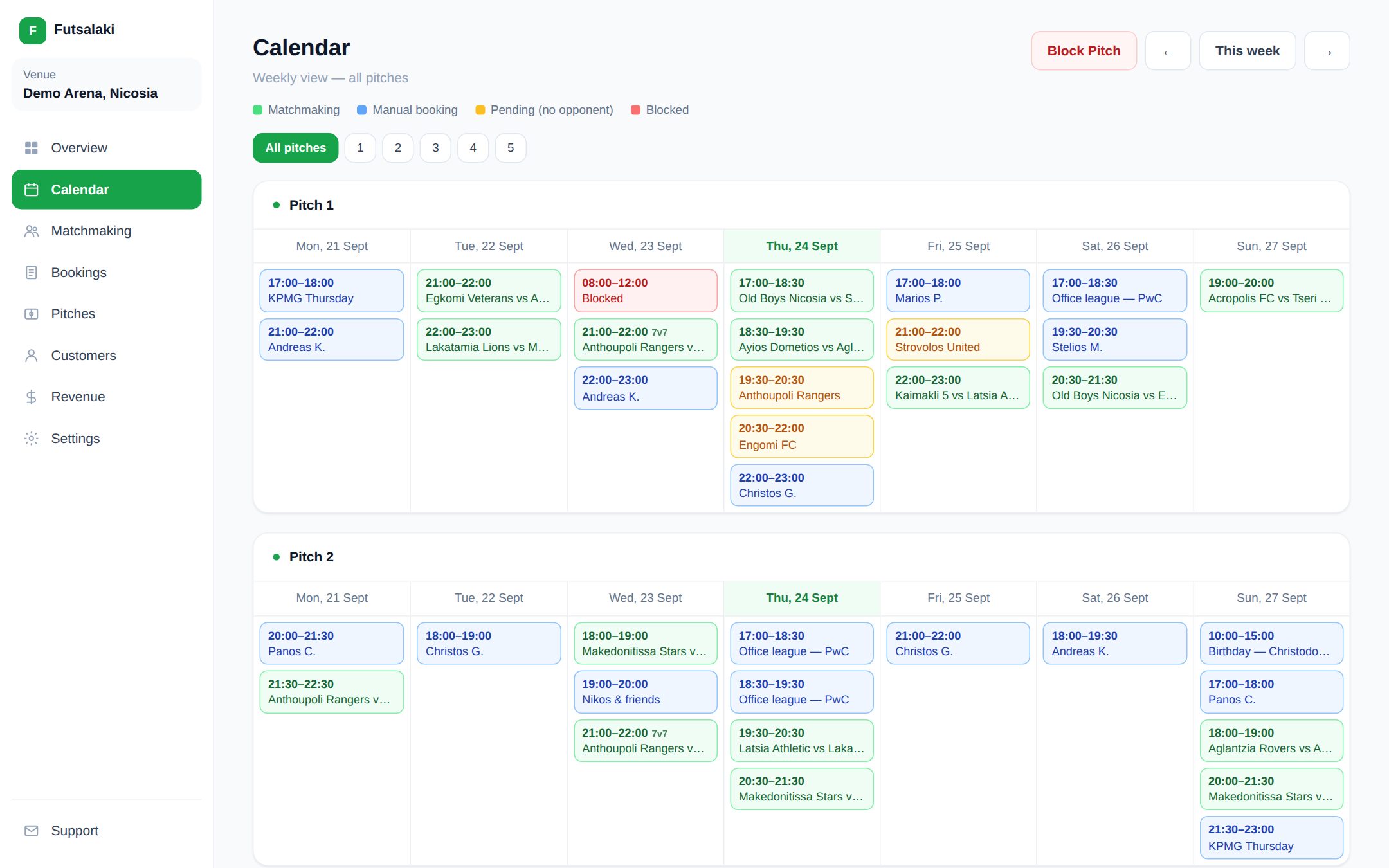
The venue calendar. Green are matches made by the app, blue are the venue’s own bookings, yellow is a team still waiting for an opponent, red is a blocked pitch.
The problemHalf a team is not a game
Futsal in Cyprus runs on group chats. Someone books a pitch, then spends the week finding ten players (or a whole second team) and chasing everyone for their share.
Venues have the opposite problem: empty slots on weeknights, bookings taken over the phone and written on paper, and no-shows that cost them the hour. Both sides want the same thing, a full pitch at a time that works, but nothing connects them.
The productTwo apps, one pool
Futsalaki is two products that share a backend: an app for teams and a dashboard for the venues they play at.
For teams: iOS & Android
- Book a full pitch, or open a match and let the app find opponents, 5v5 up to 11v11
- Pick a flexible time window instead of one fixed slot
- Short a player? “Player patch” fills the squad
- Both captains report the score; matching reports confirm automatically
- A league leaderboard and win rate for every team
For venues: web dashboard
- Weekly calendar per pitch, with walk-in and phone bookings alongside app matches
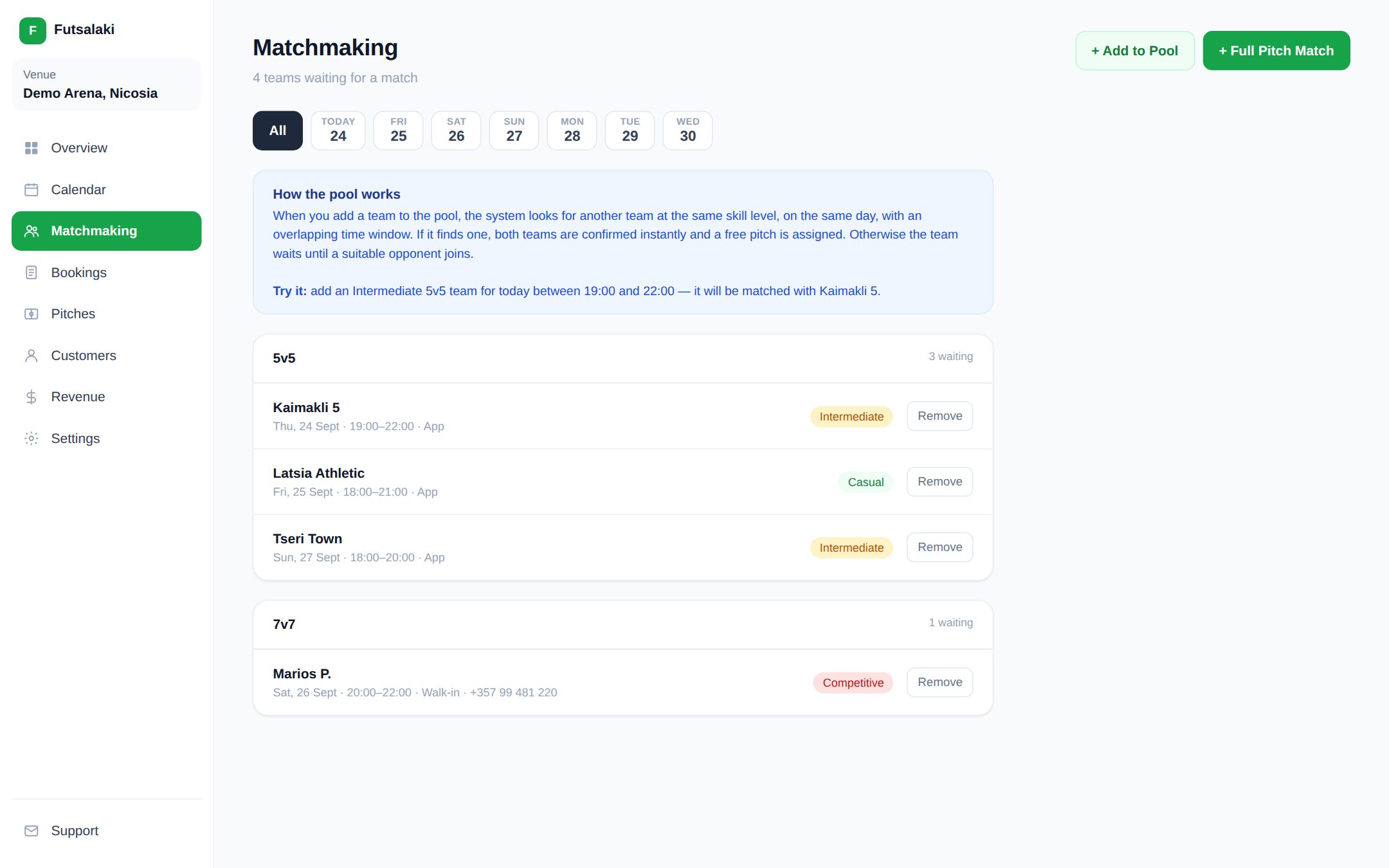
- The matchmaking pool, where staff can add walk-in teams too
- Pitches, prices and 7-a-side combinations of two pitches
- Revenue by source, CSV export, and payouts through Stripe
How it worksFrom a request to a game
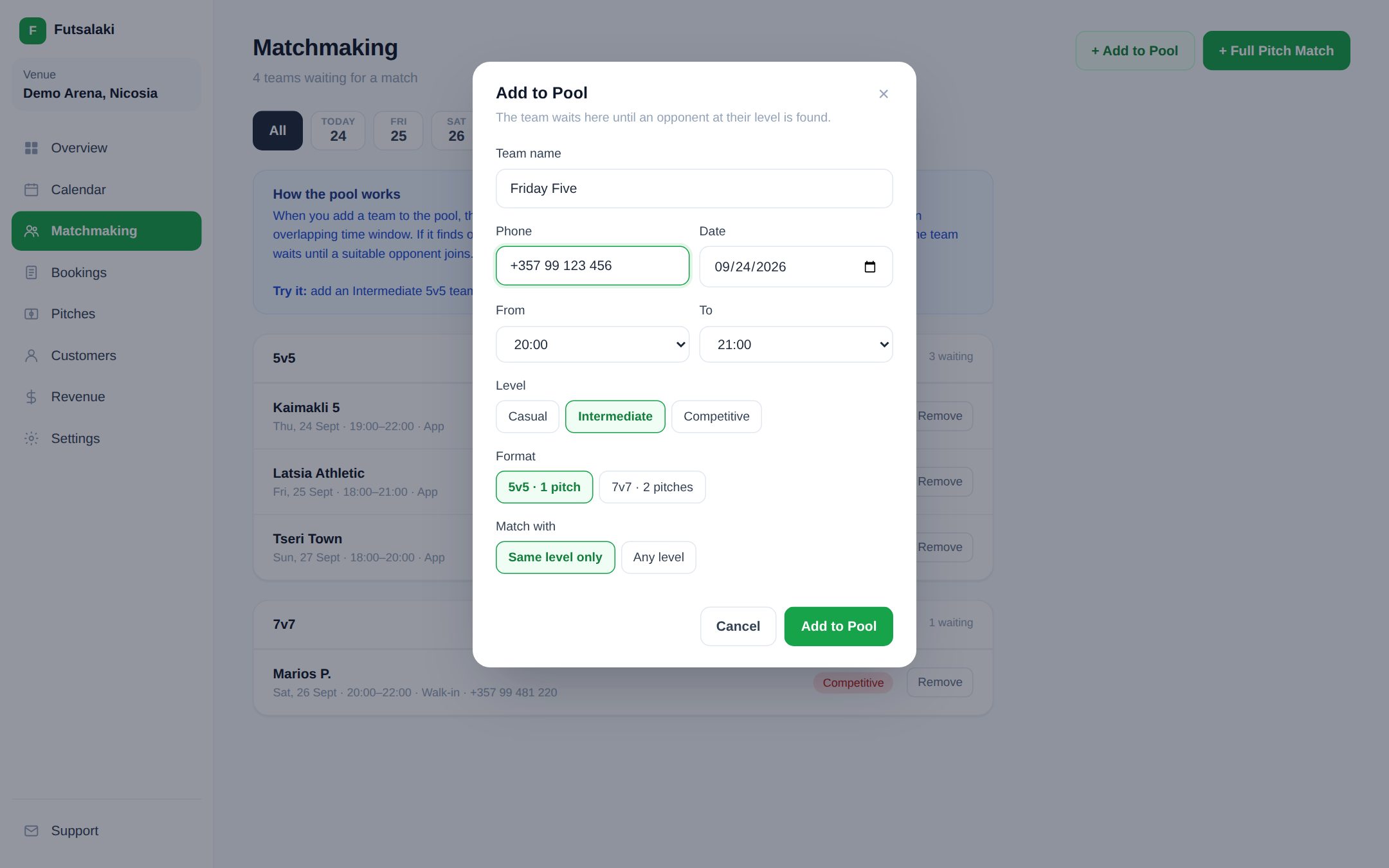
- A team joins the pool
With a date, a time window, a format (5v5 on one pitch, 7v7 on two) and a level: casual, intermediate or competitive.
- The system looks for an opponent
Same day, same format, same level (or any level if the team allows it), and at least an hour where both windows overlap.
- A pitch is assigned
The first free pitch (or pitch pair for 7v7) inside the overlap, checked against existing bookings, blocks and opening hours.
- Both teams are confirmed and charged
Payment goes through Stripe and the venue is paid out automatically. If one team cancels, it is refunded and the other goes back into the pool.
My partMoney and reliability
A booking app is only as good as the moment someone’s card is charged. That is where I spent most of my time.
I worked on the payment flow on Stripe Connect (player payments, venue onboarding and payouts, automatic refunds, and forfeits kept on late cancellations) and on making the whole thing safe to put in front of paying customers.
Before launch I led an engineering review of the codebase and split the fixes into focused workstreams: database quick wins, column-level privileges, rate limiting, error monitoring, payment safety, a CI pipeline and performance.
Under the hoodStack and decisions
- One codebase
- A Turborepo monorepo holds the player app, the venue dashboard and the shared types, so a schema change ships to both clients in the same commit.
- Player app
- React Native with Expo; builds through EAS, with over-the-air updates for JavaScript-only fixes.
- Venue dashboard
- Next.js and TypeScript, deployed on Vercel.
- Backend
- Supabase Postgres with Row Level Security on every table, Realtime for the matchmaking pool, and Edge Functions that receive Stripe webhooks.
- Payments
- Stripe Connect. Venues onboard as connected accounts and receive payouts; refunds and forfeits are handled server-side.
- CI
- GitHub Actions on every push to staging: type checks, linting, dependency audit, and a secret scan with
gitleaks.
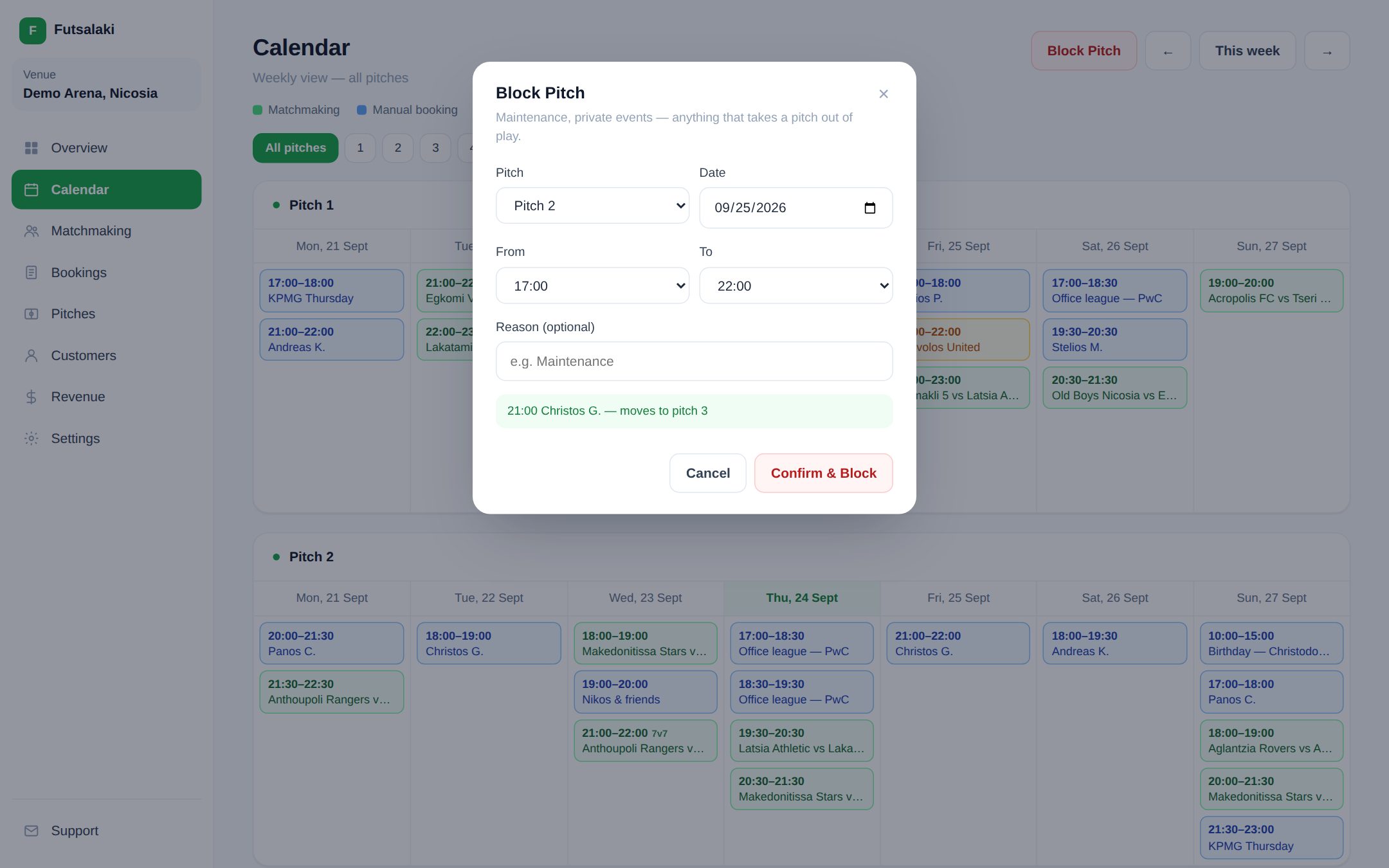
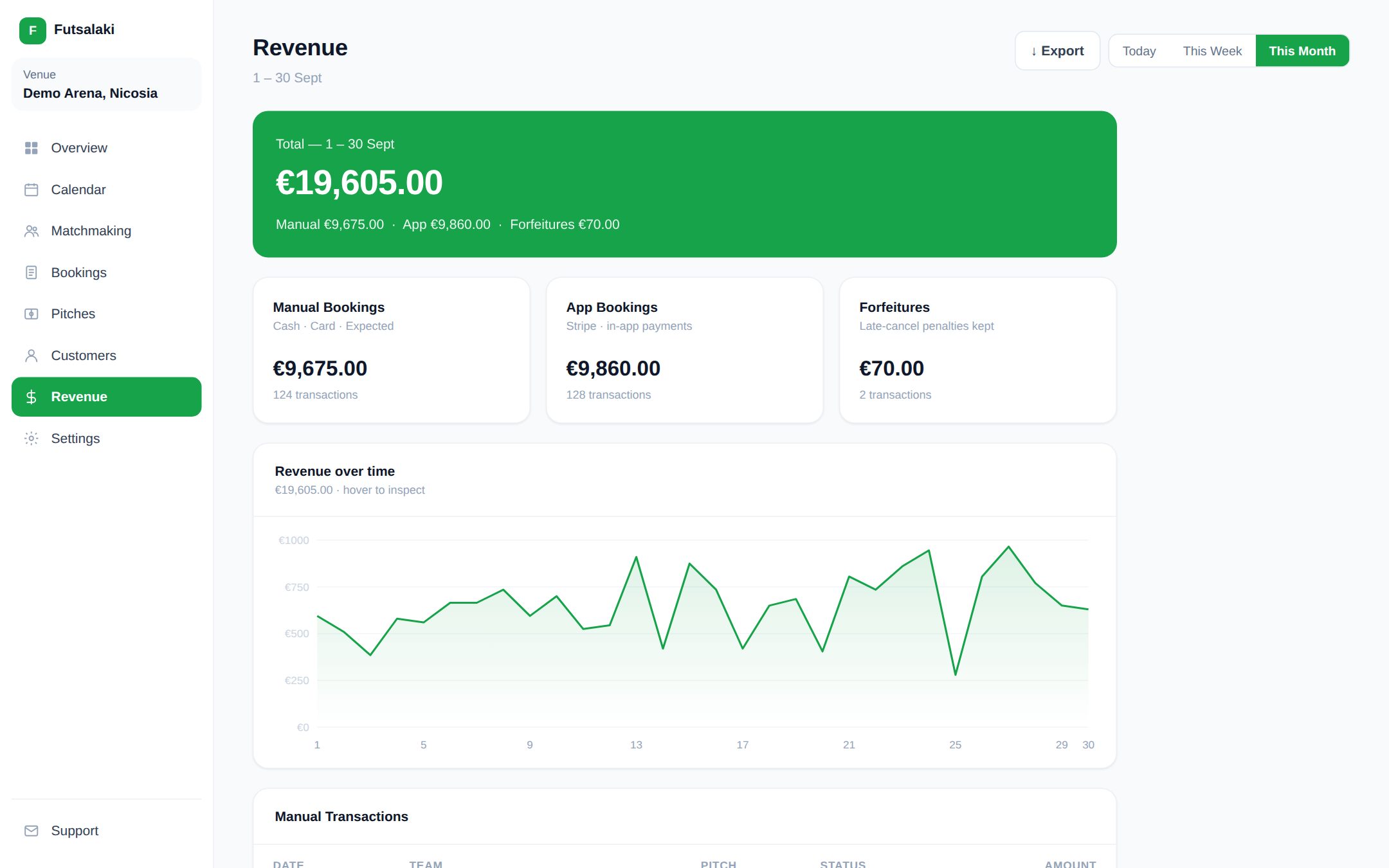
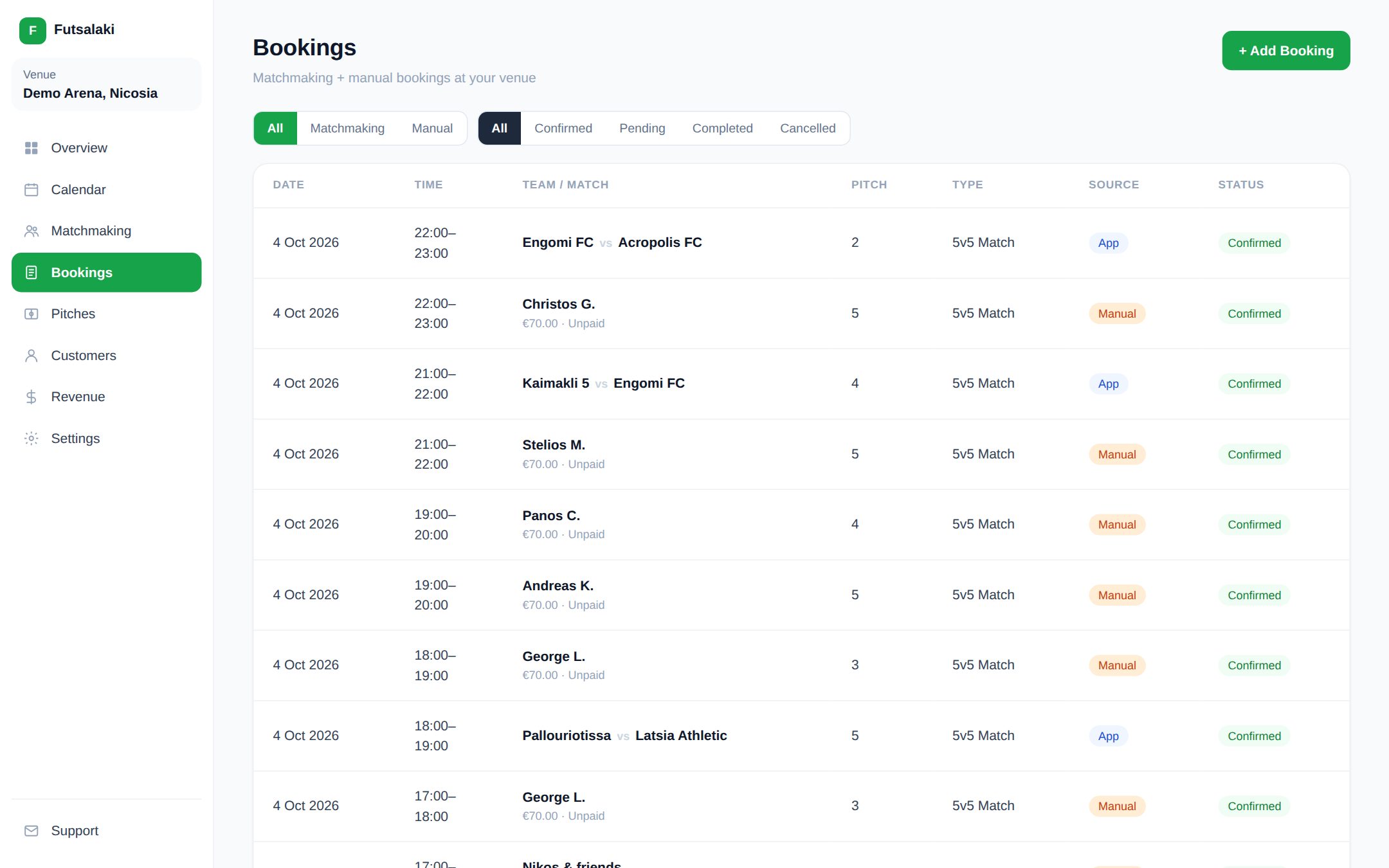
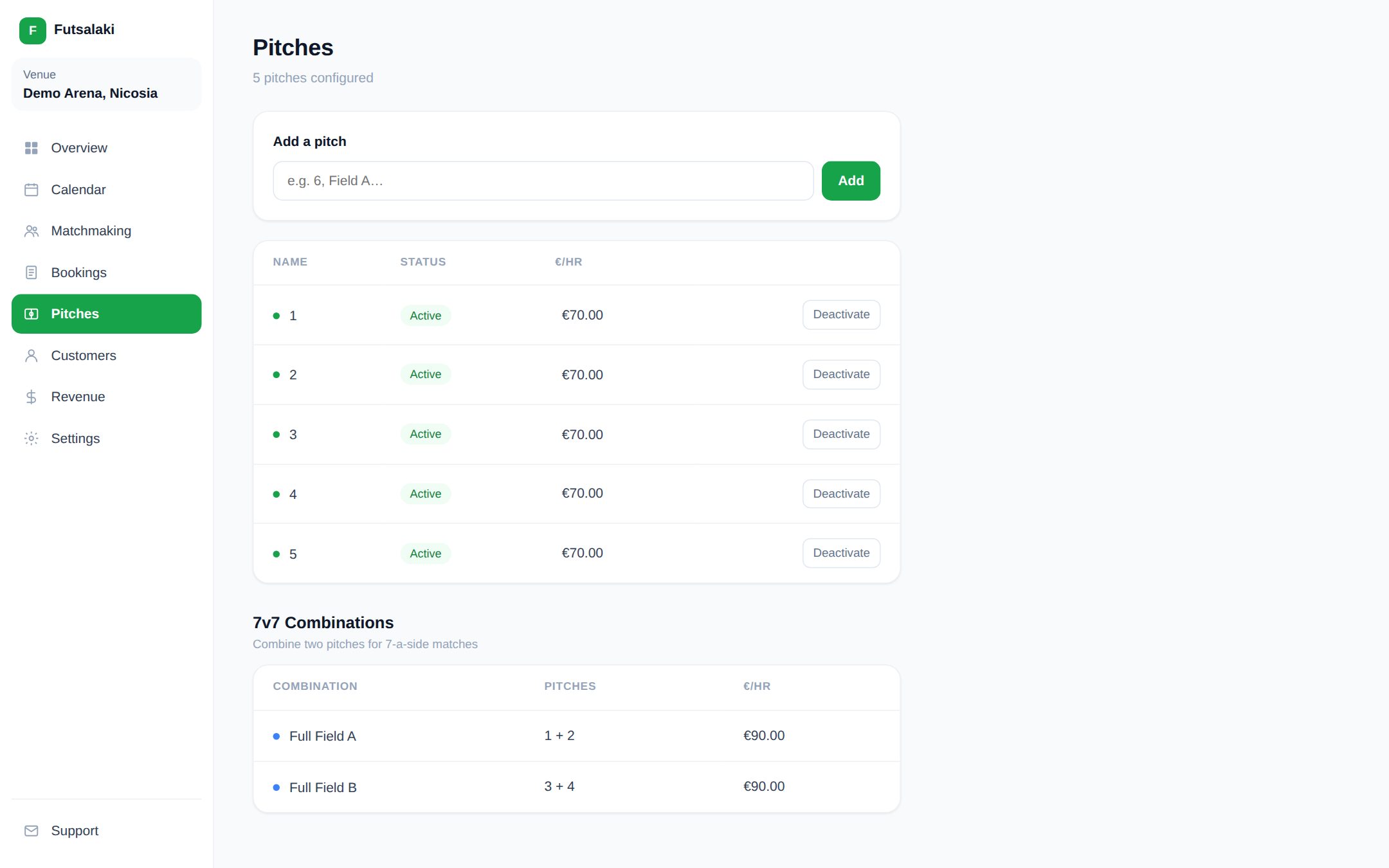
Screens from the interactive demo, which mirrors the real venue dashboard with sample data.
Try both sides of Futsalaki in your browser, with sample data
Player appJoin a match and report a score Venue dashboardAdd a team to the pool, block a pitchThe real thing is at futsalaki.com.
Next project
SSSB Market